Equipment Trailer or Car Hauler? How to Tell Which One You Need
These two trailers look similar on a lot. Both are flat, both have ramps, both come in similar lengths. They are built for different work, and buying the wrong one is an expensive lesson.
The short answer
If you are hauling machines with tracks or tires that dig in, buy an equipment trailer. If you are hauling vehicles that roll on low ground clearance, buy a car hauler.
Most of the difference comes down to two things: how steep the ramps are, and how far the deck sits off the ground.
What an equipment trailer is built for
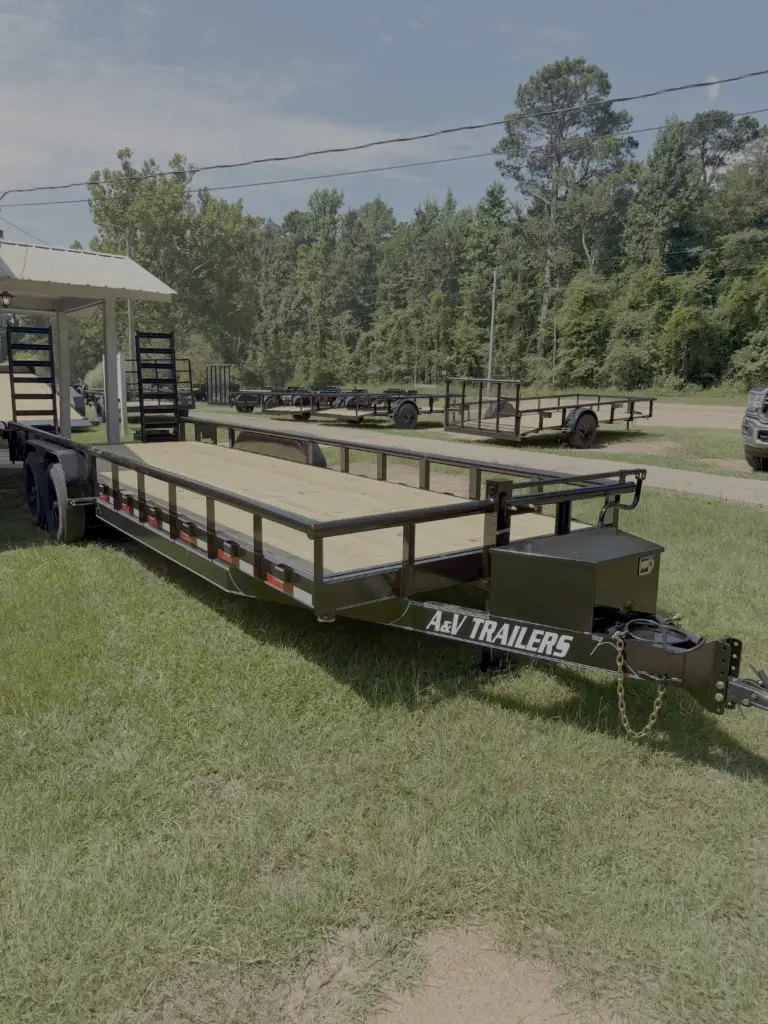
Skid steers, mini excavators, compact tractors, and attachments. The frame is heavier, the axles carry more, and the ramps are built to take concentrated weight from a track or a loaded bucket.
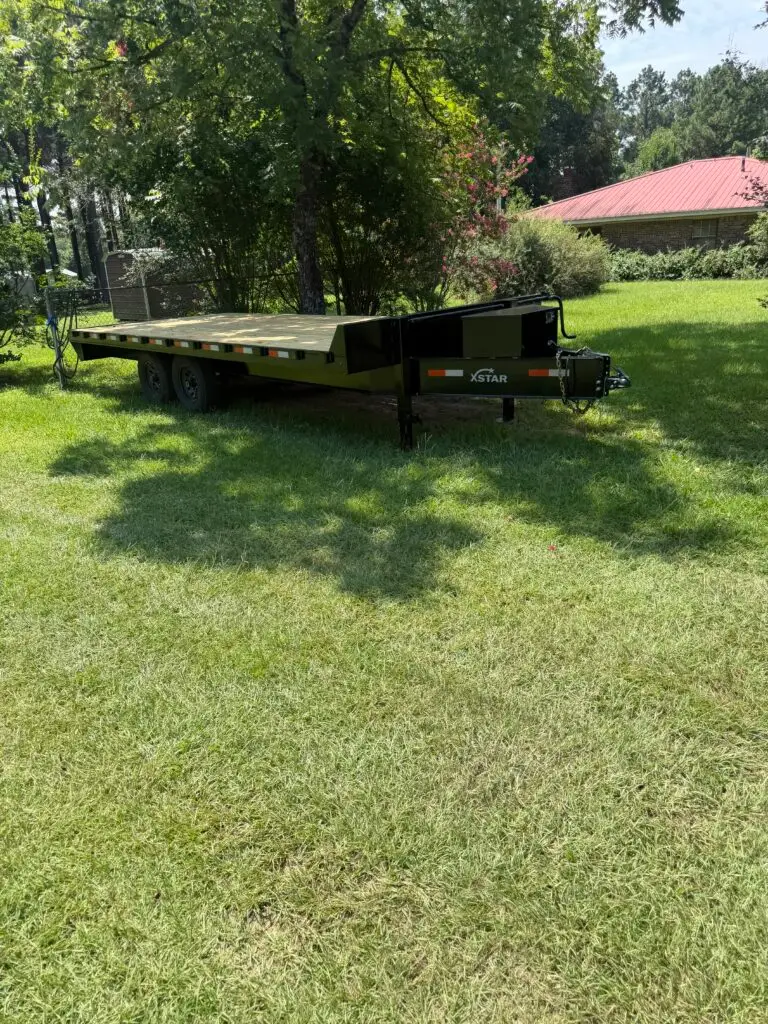
Deck height is higher because the frame sits above the axles for strength and ground clearance. That makes the ramp angle steeper, which is fine for a machine with high clearance and low gearing.
Ramps are usually stand-up or slide-in, heavy enough to hold a machine that is applying most of its weight to one point.
What a car hauler is built for
Cars, trucks, side by sides, and anything with low ground clearance. The deck sits lower and the trailer is often longer, so the approach angle is gentler.
Many have a dovetail, which is a section at the rear that slopes down toward the ramps. That drop is what keeps a front air dam or exhaust from dragging as the car climbs on.
Tie-down points are different too. Car haulers usually have more of them and place them where you can reach a frame or a wheel strap without crawling under. If you haul for work, the federal cargo securement rules in 49 CFR Part 393 set how many tie-downs a load needs and how strong they have to be.
Deck length is where people guess wrong
Measure your machine or vehicle, then add working room. A skid steer with a bucket on is longer than the spec sheet says, and you need space to walk beside the load to chain it down.
Also think about weight distribution. You want roughly 10 to 15 percent of the total loaded weight on the tongue. A deck that is too short forces the load too far back, which is what makes a trailer sway.
The mistake we see most
Someone buys a car hauler because it was cheaper, then tries to load a skid steer on it. The ramps flex, the deck is not rated for the point load, and the loader tears up the boards.
The reverse also happens. Someone buys an equipment trailer and finds their lowered truck will not clear the ramp angle without dragging.
Neither trailer is worse. They are answers to different questions.
What to bring us
- The make and model of what you are hauling, and its operating weight
- Its length with attachments on
- Your truck’s tow rating and hitch setup
- Whether you load on level ground or on a slope
With those four we can tell you which trailer fits and, more usefully, which one does not.
Take a look
Browse equipment trailers or car haulers, or call (870) 542-4661 and describe the load. We are in Foreman, Arkansas at 242 Little River 157.