Bumper Pull or Gooseneck? Plus How Wide Trailers Actually Are
Two trailers can carry the same weight on paper and tow completely differently. Most of that difference comes down to where the trailer connects to your truck.
The short version
A bumper pull hitches to a ball on a receiver at the back of the vehicle. A gooseneck hitches to a ball mounted in the bed of a pickup, over the rear axle.
Bumper pull is simpler, cheaper, and tows behind almost anything rated for it. Gooseneck carries more, tracks straighter, and turns tighter, but it needs a pickup with a bed hitch installed.
Where bumper pull is the right answer
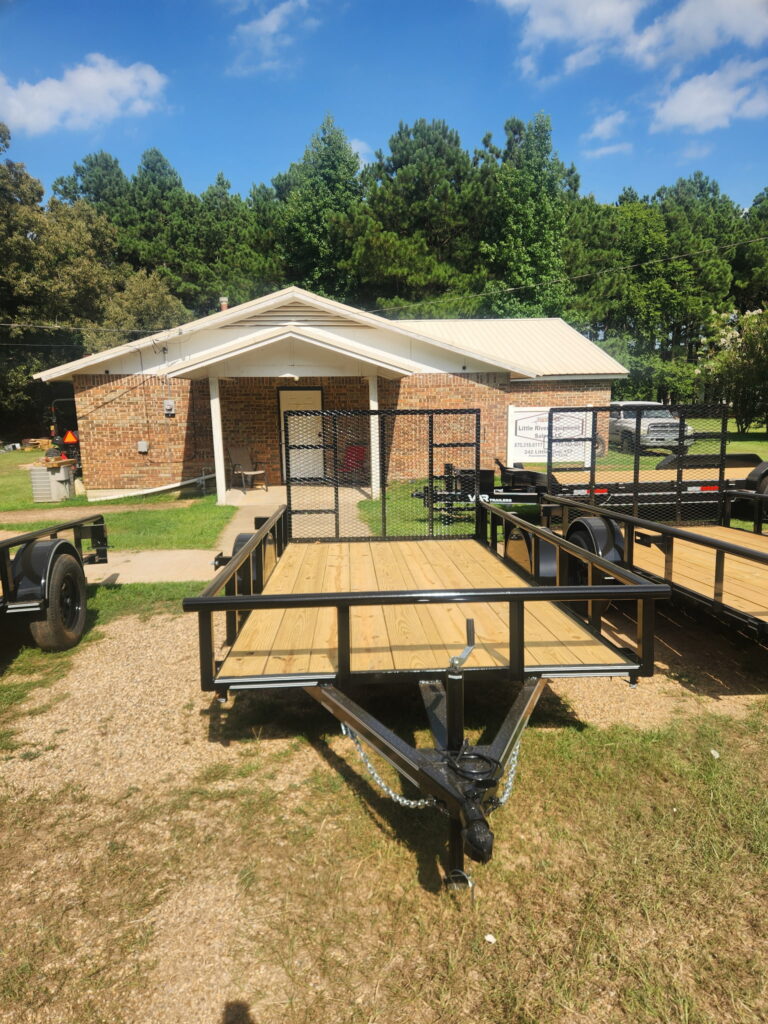
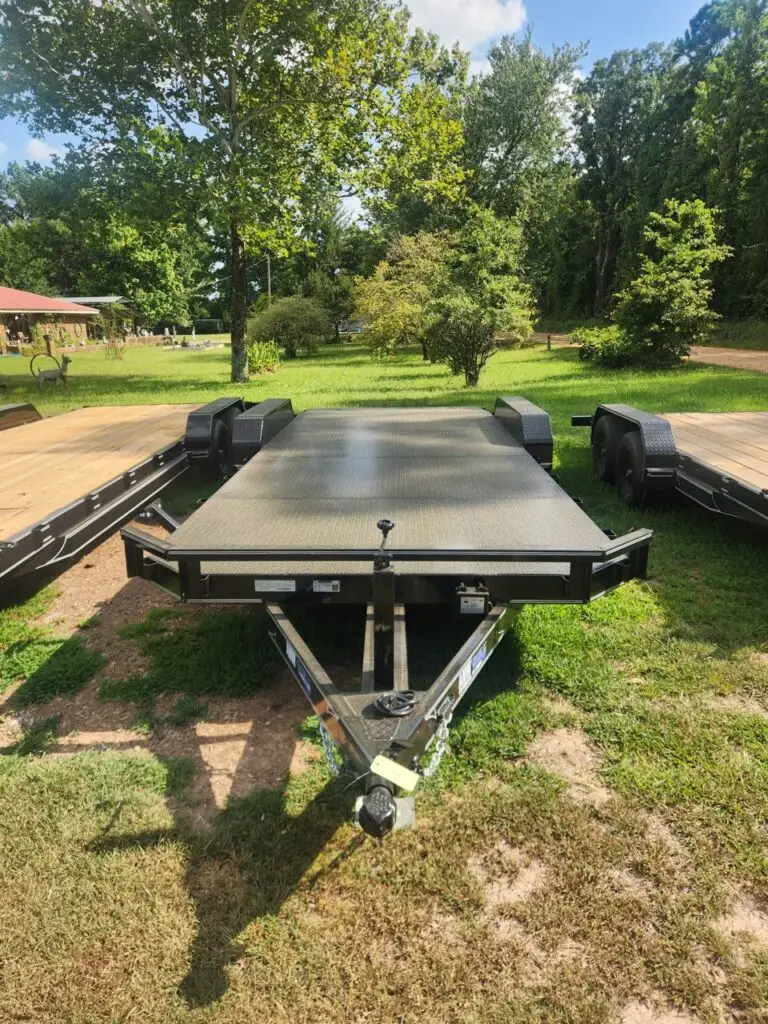
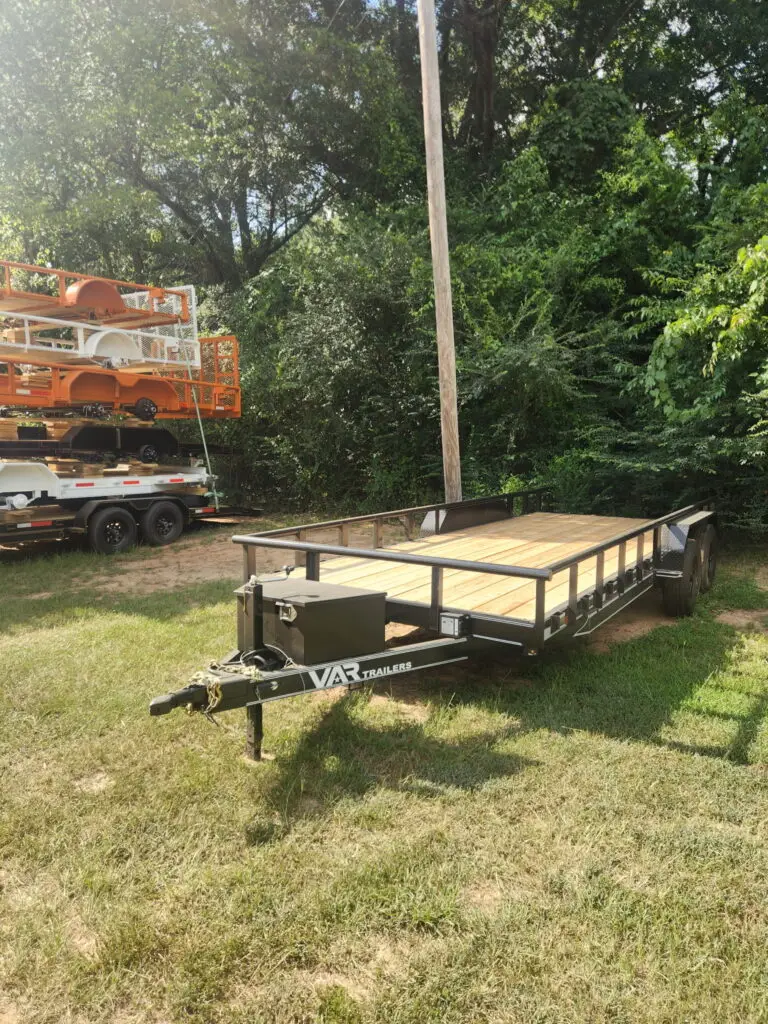
Most utility trailers, car haulers, and smaller equipment trailers are bumper pull, and for good reason. If you are hauling a mower, a side by side, a car, or a compact machine, you are well inside what a bumper pull handles.
It also leaves your truck bed free, which matters more than people expect on a work day.
Where gooseneck earns its keep
Once you are into heavier equipment or longer decks, the hitch point moves forward for a reason. Putting the weight over the rear axle instead of behind it means less leverage on the back of the truck, less sway, and more stability at highway speed.
Gooseneck also turns much tighter, which you notice the first time you back into a jobsite gate.
Weight is the deciding factor
People ask us about hauling skid steers a lot, often in the 14,000 pound range once you count the machine, attachments, and the trailer itself.
Do the arithmetic before you shop:
- Machine operating weight, from the manufacturer plate
- Plus attachments, which are heavier than they look
- Plus the trailer’s own empty weight
That total has to sit under the trailer’s GVWR and under what your truck is rated to pull. It also has to respect your truck’s payload, because tongue or pin weight comes out of payload rather than towing capacity. Heavier trailers also bring brake requirements into play; 49 CFR 393.42 is the federal baseline for commercial use. We covered that math here: how to match a trailer to your truck.
How wide is a trailer, anyway?
This one comes up constantly. Deck width is usually quoted in inches and it is the number after the length. A 20×83 trailer is roughly 20 feet long with an 83 inch deck.
Common widths you will see on our lot:
- 83 inches is the workhorse width on utility trailers, car haulers, and equipment trailers. Just under seven feet.
- 102 inches is deck over width, eight and a half feet, where the deck sits above the tires instead of between them.
Deck over gives you a flat surface with no wheel wells, which is why it suits wide loads. It also sits higher, so the ramp angle is steeper.
Which one do you need?
If you are asking the question, a bumper pull is probably right. Gooseneck becomes the answer when weight, deck length, or maneuvering pushes you there, and by then you usually know it.
Tell us what you are hauling and we will tell you straight which side of the line you are on. Call (870) 542-4661 or look through what is in stock.